Bjorn Grotting Photography

Blog

The Supermoon

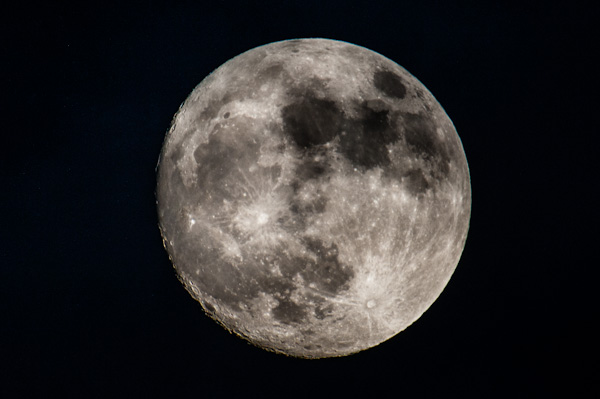
The Moon at full perigee, the coinciding of full moon and shortest distance to the earth. Also known as the Supermoon. (Photo Bjorn Grotting)

The Moon at full perigee, the coinciding of full moon and shortest distance to the earth. Also known as the Supermoon. (Photo Bjorn Grotting)

These days there is a lot of fuzz in the media regarding the so-called Supermoon, some even believe this is the end of the world as we know it…

Fear not, this is the rare occasion when the Moon is at it’s closest to the earth, or perigee, coinciding with a full Moon. It makes the Moon look slightly bigger and brighter, but only by approximately 12%, so in reality you wouldn’t really know, as it is already quite small on the sky. If it’s close to the horizon it will however look bigger due to an optical illusion. Super or not, it doesn’t really matter, just enjoy the view! The above image was taken yestaerday, with the Supermoon as seen from my home in Stavanger, Norway.

(more…)

Sakhalin, Russias largest island

Russia, Sakhalin. Okhotskoye is a small village at the south east coast of Sakhalin, not far from Yuzhno-Sakhalinsk. Residential buildings are mostly made of wood. (Photo Bjorn Grotting)

Russia, Sakhalin. Okhotskoye is a small village at the south east coast of Sakhalin, not far from Yuzhno-Sakhalinsk. Residential buildings are mostly made of wood. (Photo Bjorn Grotting)

Sakhalin island, just north of Japan and off the east coast of Russia, has led to many bitter disputes between the two countries. The island is today part of Russia, and is Russia’s largest island.

I visited the island last year, and have added several images to the photo gallery.

(more…)

Winter in Grand Canyon

United States, Arizona, Grand Canyon. Sunset at Lipan Point, with sunrays hitting some of the peaks. (Photo Bjorn Grotting)

United States, Arizona, Grand Canyon. Sunset at Lipan Point, with the last sunlight hitting some of the rock formations. (Photo Bjorn Grotting)

I recently came back from a trip to western United States, including a couple of days at the Grand Canyon. It was still early February, so I was afraid we would meet some really bad weather up there. To my delight we had cold but nice and sunny winter conditions, with some snow in parts of the park.

(more…)

Baku, capital of Azerbaijan

Azerbaijan, Baku. Baku city view with tha harbour and the Caspian Sea in the background. (Photo Bjorn Grotting)

Azerbaijan, Baku. Baku city view with the harbour and the Caspian Sea in the background. (Photo Bjorn Grotting)

Click here to see some newly added images from Baku, the capital of Azerbaijan. I visited the country last year to do a job there, and had a few hours to spend in the city. Baku is probably derived from the old Persian name Bād-kube, meaning “Wind-pounded city”. It can also mean “Mount of God” from Baghkuh, which one also can compare to Baghdad.

(more…)

A visit to Morocco

Bab Agnaou is one of the nineteen gates of Marrakech, Morocco. (Bjorn Grotting)

Bab Agnaou is one of the nineteen gates of Marrakech, Morocco. (Photo Bjorn Grotting)

I have just added a new gallery with images from Morocco taken during a visit some time ago. Follow this link to take a look; Morocco Photo Gallery. Some panorama photos is included as well.

The roundtrip started in  Marrakech at the foot of the Atlas mountains. This amazing city with its old medina, the largest souk (traditional market) in Morocco and one of the busiest squares in Africa, Djemaa el Fna, is absolutely worth a visit, and full of photo opportunities.

Heri es- Souani, the old granary and stables for some of Moulay Ismails 12000 horses in Meknes. (Bjorn Grotting)
Heri es- Souani, the old granary and stables for some of Moulay Ismails 12000 horses in Meknes. (Photo Bjorn Grotting)

Next stop was Meknes which was the capital of Morocco under the reign of Moulay Ismail. Main sights to visit includes the Bab Mansour gate (built in 1732), Mausoleum of Moulay Ismail (built in 1703) and Dar El Makhzen palace.
(more…)

The dung rolling scarab beetles

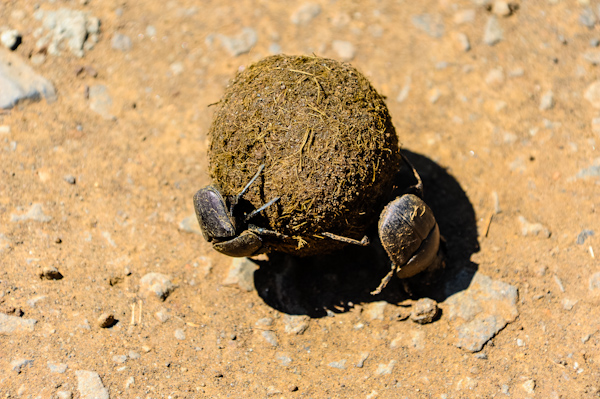
Two dung beetles doing what they do best, Kruger Park, South Africa. Many dung beetles, known as rollers, are known for rolling dung into spherical balls, used as food or egg chamber. (Photo Bjorn Grotting)

Two dung beetles doing what they do best, Kruger Park, South Africa. Many dung beetles, known as rollers, are known for rolling dung into spherical balls, used as food or egg chamber. (Photo Bjorn Grotting)

Now, what is it NOT to love about dung beetles? Actually I can’t think of anything. Take for example the fact that most of the about 5.000 subspecies feed partly or exclusively on feces. Why don’t they ever consider another diet, you may ask? But that is exactly the recipe for their success. Remember Darwin never said “survival of the strongest”, he said “survival of the fittest”. The most adaptable species will succeed, and dung beetles have definitively found their niche.

So what’s so great about an insect that consumes and bury manure? Most people never think about it, but what happens if tons of dung from livestock are left alone on the fields is that it becomes a habitat for pests like flies. Another benefit is the improved recycling of nutrients and improvement of the soil structure. The cattle industry in the United States alone estimates a saving of several hundred million US$ every year due to the actions of the dung beetles. No wonder then that countries like Australia and New Zealand have introduced certain species of dung beetle. The quality and fertility of the pastures, as well as hygiene, has since improved considerably.

The ancient Egyptians regarded several species of the dung beetle as sacred. The best known is the Scarabaeus sacer (the sacred scarab). The Egyptians believed the dung beetles was purely of male gender and deposited their semen into a dung ball. This resembles Khepri, the god of the rising sun, who created himself out of nothing. The dung ball also symbolizes the sun.

In fact both male and female will be around the ball, but usually it is the male that rolls while the female is hitch-hiking. This is no big deal for a dung beetle which can roll up to 50 times it’s own weight. The ball is then buried in soft soil, and the female will lay her eggs inside it. When hatched the larvae will feed on the dung surrounding it.

Dung beetles with this behavior is known as “rollers”, like those you can see on the image above. Other subspecies are known as “tunnelers”, which bury the dung at the same spot as they find it. Another group is called “dwellers”, who simply live in the manure without any rolling nor burrowing.

As I said, what is it not to love about them?

The Cameleopard

Giraffes feeding on leaves. Hluhluwe-Umfolozi Game Reserve, South Africa. The giraffe (Giraffa camelopardalis) is the tallest of all land-living animal species. (Photo Bjorn Grotting)

Giraffes feeding on leaves, acacia trees are among its favorite food. Hluhluwe-Umfolozi Game Reserve, South Africa. (Photo Bjorn Grotting)

How about some images of live giraffes?

These are images I took during a visit to the Hluhluwe-Umfolozi Game Reserve in South Africa a while ago. Hluhluwe-Umfolozi is located 280 km north of Durban, and is the oldest proclaimed park in Africa.

Did you know that the giraffes’ scientific name (Giraffa camelopardalis) refers to its irregular patches of color resembling a leopards spots and to its face which is similar to a camel, hence the English name cameleopard? Cameleopard was used in the English language from the 14th century till the 19th century, when it was replaced by giraffa. The name giraffe though is first known as an Arabic word (ziraafa or zurapha).

Giraffe against a blue sky in Hluhluwe-Umfolozi Game Reserve, South Africa (Photo Bjorn Grotting)

Giraffe against a blue sky in Hluhluwe-Umfolozi Game Reserve, South Africa. Formerly known as cameleopard due to its leopard-like spots and camel-like head. (Photo Bjorn Grotting)

The tallest giraffe ever measured was almost 6 meters high, but the common height varies between 4 to 5 meters. There are at least 9 subspecies of giraffe which varies in color, pattern, size and habitat. The giraffes you can see on these photos is the South African Giraffe (Giraffa camelopardalis giraffa), which is a subspecies found in South Africa, Namibia, Botswana, Zimbabwe and Mozambique.

(more…)

Lions vs Giraffe

Young male lions feeding on a giraffe. Kruger Park, South Africa. (Photo Bjorn Grotting)

Young male lions feeding on a giraffe. Kruger Park, South Africa. (Photo Bjorn Grotting)

It was our last day in the Kruger National Park in South Africa, and early in the morning we were heading through the park towards the Paul Kruger Gate in a large tourist bus when all traffic suddenly came to a full stop.

Looking out of the window I could clearly see the reason why; a small group of three young male lions had very recently brought down an adult giraffe, and were feeding on the carcass just a few meters from the roadside. A red track of blood could be followed to the other side of the road, were the actual kill had taken place.

I prefer to go with smaller cars when looking for animals, but this day was en exception; the large and tall bus gave us a much better view than what would have been possible from a smaller vehicle. I almost felt pity for all the people caught in the traffic jam who could hardly see what was going on. Well, that feeling faded quickly, as I became too busy shooting photos through the bus window.

Young male lions feeding on a giraffe. Kruger Park, South Africa. The lion (Panthera leo) is one of the four big cats. These young male lions were feeding on a fresh kill; a giraffe. (Bjorn Grotting)

The lions didn't seem to be much affected by the large number of people watching them. (Photo Bjorn Grotting)

(more…)

Penguins on the Beach

Penguins on Boulders Beach. It is a popular tourist stop because of a colony of African Penguins which settled there in 1982. (Photo Bjorn Grotting)

Penguins on Boulders Beach. It is a popular tourist stop because of a colony of African Penguins which settled there in 1982. (Photo Bjorn Grotting)

Until I visited South Africa a couple of years ago I’ve never seen a penguin in the wild.  And I certainly didn’t expect to meet some on the African continent. But there they were, happily bouncing around on a beach not far from Cape Town. Boulders Beach is a sheltered bay located on the Cape Peninsula near Simonstown. Also known as Boulders Bay, it is a part of the Table Mountain National Park.

Even if the bay is located in the midst of a residential area, a colony of African Penguins settled here in 1982. Actually it was only two breeding pairs at first, since then the colony has grown to about 3.000 individuals. Today it is a popular tourist stop, and newly constructed boardwalks will take visitors to within a few meters of the birds.

African Penguin with egg on Boulders Beach. (Photo Bjorn Grotting)

African Penguin with egg on Boulders Beach. (Photo Bjorn Grotting)

The African Penguin is also known as the black-footed penguin, the Cape penguin or the “Jackass” penguin. The latter because of it’s donkey-like sounds. It is found on the south-western coast of Africa, and is the only penguin species that breeds in Africa. It can measure more than 60 cm in length, and weigh about three to five kg.
(more…)

From Iceland to the Moon

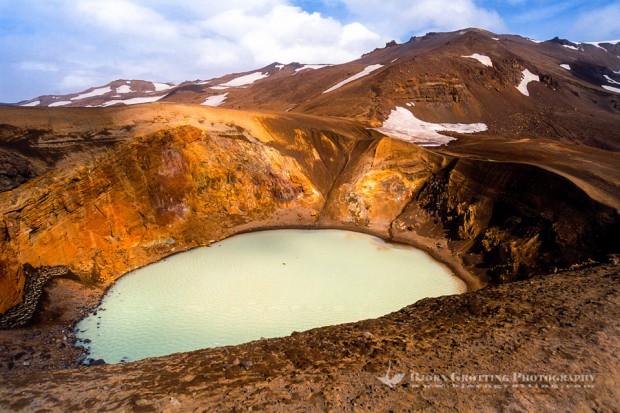
Not the moon, not even close. The astronauts main objective in Askja was to study geology. (Photo Bjorn Grotting)

Not the moon, not even close. The astronauts main objective in Askja was to study geology. (Photo Bjorn Grotting)

The phrase “The area was used during training for the Apollo program to prepare astronauts for the lunar missions” is commonly used when trying to attract tourists to the Askja area on Iceland and similar desolated locations. You can see it all flashing before your eyes; heroic astronauts jumping around in bulky space suits, trying not to fall over in the moonlike landscape.

Well, it is a common misconception that the Apollo astronauts traveled to wastelands on earth to get used to the bleak hell of the barren moon. As someone said: “for that they could have stayed in Houston”. I’ve never been to Houston, so I cannot say…

(more…)


Birds

Tur til Sør-Afrika 2009
Penguins on the Beach

Until I visited South Africa a couple of years ago I’ve never seen a penguin in the wild.  An…

More in Birds

Mammals

South-Africa
The Cameleopard

How about some images of live giraffes? These are images I took during a visit to the Hluhluwe-Umfol…

More in Mammals

Africa

Morocco Marrakech
A visit to Morocco

I have just added a new gallery with images from Morocco taken during a visit some time ago. Follow …

More in Africa

Asia

Russia, Sakhalin, Okhotskoye.
Sakhalin, Russias largest island

Sakhalin island, just north of Japan and off the east coast of Russia, has led to many bitter disput…

More in Asia

Europe

Harrison Schmitt by a lunar boulder
From Iceland to the Moon

The phrase “The area was used during training for the Apollo program to prepare astronauts for…

More in Europe